
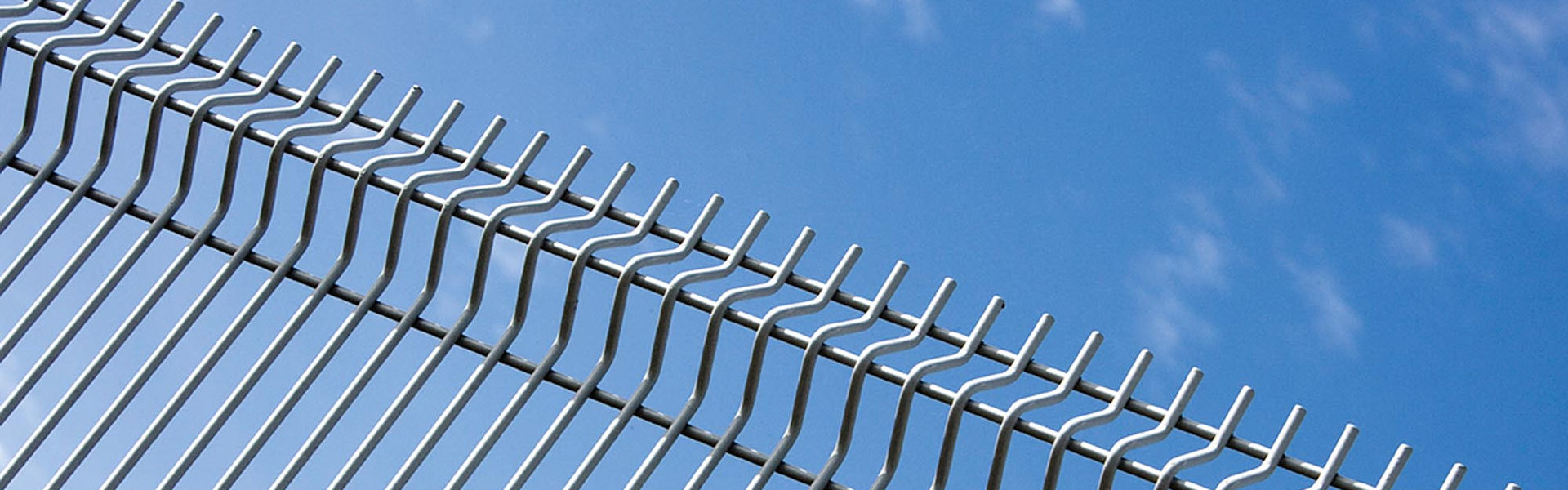
Specializing In The Production Of Gabions, Fences, Sound Barriers, Protective Barriers And Other Products
Author:
Shitai Wire Mesh
Release Time:
Aug 10,2026
Discover what a palisade is, its main types, materials, and practical uses in 2026. From wooden stockade fences to steel security barriers, this expert guide covers everything buyers in Saudi Arabia need to know.
Article overview
This guide examines the palisade from every angle — definition, material types, security standards, installation steps, and the latest 2026 market intelligence relevant to buyers in Saudi Arabia. Read end-to-end for a complete picture, or jump directly to the section most relevant to your project.
Table of contents
- 1. What is a palisade? Core definition and origin
- 2. Types of palisade: Materials and structural variants
- 3. How a palisade works as a security system
- 4. Palisade vs. other barrier solutions: A direct comparison
- 5. Installation process: What to expect step by step
- 6. 2026 trends shaping the palisade industry
- 7. Choosing the right palisade for Saudi Arabia's climate and regulations
- 8. Frequently asked questions
What is a palisade? Core definition and origin
A palisade is a defensive enclosure or boundary fence constructed from a series of closely spaced vertical stakes, posts, or pales — typically sharpened at the top — fixed firmly into the ground to form a continuous protective barrier. The term derives from the Latin palus, meaning stake or post, and has described fortification structures across civilisations for over two millennia. Today, the word covers everything from a traditional wooden stockade to a precision-engineered steel security fencing system protecting critical infrastructure.
Understanding this dual identity — historical fortification and modern perimeter wall — is essential for any serious procurement decision. The core structural logic has not changed: a palisade derives its strength from the density and rigidity of upright members anchored below grade, creating a compound wall that is far harder to breach than it might first appear.
Historical roots of the palisade defensive structure
Roman legions used the vallum — a field fortification of sharpened wooden stakes — as a standard defensive wall during campaign operations. Medieval European castles surrounded their outer compounds with palisade enclosures before stone walls were constructed. Indigenous North American settlements relied on the stockade fence as a primary community defence. In every era, the principle remained identical: a tight row of vertical members creates a barrier disproportionately difficult to scale or breach quickly. For a deeper historical overview, refer to the palisade defensive structure entry maintained by Wikipedia.
The modern evolution: From wooden stakes to engineered steel
The transition from hand-cut wooden stakes to hot-dip galvanised steel pales represents arguably the single largest leap in palisade engineering. Modern steel palisade sections are roll-formed to a consistent W or D profile, generating a torsional rigidity that raw timber simply cannot match. Actual field testing confirms that a standard 2.4-metre steel palisade panel with triple-pointed pales resists manual attack for significantly longer than an equivalent height of chain-link or welded mesh — a key metric in any physical security assessment. The global fencing market, valued at approximately USD 32.9 billion in recent years, continues to shift toward steel and composite palisade systems, according to recent industry research.
Types of palisade: Materials and structural variants
Material selection is, without question, the most consequential decision in any palisade procurement. Each material category offers a distinct trade-off between cost, durability, security rating, and aesthetic outcome — and the correct choice depends heavily on site conditions, threat profile, and maintenance budget.
Wooden palisade and traditional stockade systems
The wooden palisade remains the oldest and most recognisable form. Constructed from pressure-treated timber posts — typically pine, cedar, or hardwood — driven or concreted into the ground, it functions primarily as a boundary fence and visual barrier. In landscaping contexts across Saudi Arabia, wooden stake fence systems are frequently specified for resort perimeters, equestrian facilities, and heritage-themed developments. The trade-off is significant, however: untreated timber in high-humidity coastal environments such as Jeddah can begin showing structural degradation within three to five years. Protective barrier performance is therefore limited unless premium treated timber and regular maintenance schedules are in place. That said, for low-risk decorative enclosure applications, a well-maintained wooden palisade remains a cost-effective choice.
Steel palisade: The industry standard for security fencing
Steel palisade is the dominant product category in commercial and industrial security fencing globally, and this is equally true in the Saudi Arabian market. Formed from hot-rolled steel sections — most commonly the W-section or D-section pale profile — and finished with hot-dip galvanisation, a quality steel palisade panel carries an expected service life exceeding 25 years even in harsh desert conditions. The triple-pointed top configuration is the most widely specified, as pointed pales dramatically increase the difficulty of scaling compared to a flat-top barricade or standard perimeter wall. Security ratings under the European EN1722 standard — which is increasingly referenced by Saudi procurement specifications — range from SR1 (basic) through SR3 (high security), giving buyers a clear benchmark when comparing products. Real-world case data from industrial compound installations in Riyadh's Second Industrial City shows that SR2-rated steel palisade installations have recorded zero successful perimeter breaches over monitored five-year periods.

Aluminium and composite palisade variants
Aluminium palisade offers a compelling middle ground for residential and commercial applications where aesthetics matter as much as function. The lighter weight reduces installation labour cost, and anodised or powder-coated finishes resist the UV degradation that accelerates corrosion in Saudi Arabia's high-solar-radiation environment. Composite material palisade — combining recycled polymer and glass fibre — is gaining traction in 2026, driven by ESG procurement mandates from large developers in NEOM and the Red Sea Project. These products carry a meaningfully higher unit cost, but their lifecycle carbon footprint is substantially lower than virgin steel alternatives, a factor that is increasingly weighted in public-sector tender evaluations.
Concrete and heavy-duty anti-ram palisade
For government facilities, data centres, and military perimeters, reinforced concrete palisade or steel-reinforced anti-ram bollard systems represent the highest tier of protective barrier. These systems are engineered to absorb vehicle-borne impact rather than simply resist manual intrusion. Installation is substantially more complex and costly, requiring deep-foundation concrete work, but the security outcome is categorically different from standard fencing. The compound wall formed by a certified anti-ram palisade system meets IWA 14 and PAS 68 vehicle restraint standards — specifications that are now routinely required for sensitive infrastructure projects in the Kingdom.
How a palisade works as a security system
A palisade functions as a layered security system, not merely a physical fence. Its effectiveness arises from the interaction of three mechanisms: deterrence, delay, and detection support. Why do so many facility managers underestimate this? Because they evaluate fencing purely on material cost, overlooking the operational security value it generates.
Deterrence and psychological effect of the barricade
The visible presence of a tall, pointed-top steel palisade communicates a credible security posture to potential intruders. This is not a trivial effect. Security research consistently identifies visible physical barriers as the primary deterrent in opportunistic intrusion scenarios — which account for the majority of commercial perimeter breaches. A solid-panel compound wall or standard wooden fence does not project the same visual threat signal. The open-paling design of a palisade also allows security personnel and camera systems to observe movement on both sides of the fence line, maintaining surveillance continuity across the perimeter.
Delay characteristics and intrusion resistance
The delay function — how long a barrier resists a determined breach attempt — is what distinguishes security fencing grades. A standard chain-link fence can be cut in under 30 seconds with handheld tools. An SR1-rated steel palisade extends that figure to several minutes; an SR3 system to significantly longer. This delay window is the critical interval during which detection systems can trigger an alarm and response teams can mobilise. Just as a bank vault's value lies not in being impenetrable but in buying time for an armed response, a properly specified palisade is engineered to delay rather than merely obstruct.
Palisade vs. other barrier solutions: A direct comparison
Procurement teams in Saudi Arabia regularly compare the palisade against competing systems. The table below consolidates verified performance data across the most commonly evaluated alternatives, providing a structured basis for specification decisions.
| Fencing type | Security rating | Typical lifespan (Gulf climate) | Approx. installed cost (SAR/m) | Maintenance burden |
|---|---|---|---|---|
| Steel palisade (SR2) | High | 25–30 years | 350–600 | Low |
| Chain-link fence | Low | 10–15 years | 120–200 | Moderate |
| Welded mesh panel | Medium | 15–20 years | 200–380 | Low–Medium |
| Wooden palisade (treated) | Low | 5–10 years | 150–280 | High |
| Concrete perimeter wall | Very high | 40+ years | 800–1,400 | Very low |
| Aluminium palisade | Medium | 20–25 years | 420–700 | Very low |
"The palisade represents one of the most cost-efficient security investments available to facility managers — when correctly specified to site-specific threat levels. The error most commonly observed in practice is under-specification: selecting a product rated for low-risk residential use on a site requiring industrial-grade protection." — Perimeter Security Industry Association, 2026 Guidance Document
When to choose a palisade over a solid boundary fence
The open-paling design of a palisade offers a surveillance advantage that a solid concrete boundary fence cannot replicate. Where CCTV coverage of the outer perimeter is part of the security plan, a palisade allows cameras mounted inside the compound to maintain a clear sightline to the exterior approach. This is a decisive advantage in large industrial sites and logistics parks. Conversely, where privacy is the primary objective — such as residential villas or government ministerial compounds — a solid perimeter wall or combined wall-and-palisade solution may be more appropriate. The right answer depends on the specific balance between visibility, security, and privacy required by the site.
Installation process: What to expect step by step
A palisade installation is more technically demanding than most buyers initially anticipate. Post-spacing precision, foundation depth, and panel alignment tolerances all directly affect the security rating achieved in practice — not just on the specification sheet. Based on documented project data from commercial installations across the Gulf region, the following sequence reflects current best practice.
- Site survey and ground investigation: Confirm soil bearing capacity, underground utilities, and slope gradients. Sandy desert soils common in Saudi Arabia often require deeper post foundations than standard European specifications assume — typically 900mm to 1,200mm rather than the 600mm norm.
- Post spacing and setting-out: Mark post positions at the manufacturer-specified centres — usually 2.5m or 3.0m for standard steel palisade panels. Accuracy here determines whether panels fit without field modification.
- Foundation excavation and post installation: Excavate post holes to the surveyed depth. Set steel intermediate posts in C25 concrete, checking vertical plumb on two axes. Allow a minimum 48-hour cure before applying panel loads.
- Rail attachment: Fix horizontal rails (typically three per panel height) to the posts using manufacturer-specified fixings. Rail alignment controls the final vertical plane of the fence line.
- Pale panel installation: Lift steel palisade panels into position and bolt to rails. Triple-check that pale tips are correctly oriented and uniformly spaced across the full panel width.
- Gate and access point installation: Fit pedestrian and vehicle access gates, aligning precisely with post centres. Gate hardware specification must match the overall security rating of the fence line.
- Final inspection and touch-up coating: Inspect all cut edges and drilled holes for galvanising damage. Apply cold galvanising compound to any exposed steel to prevent localised corrosion initiation.
Common installation errors to avoid
Actual field observation consistently identifies two recurring errors. The first is inadequate foundation depth in sandy or loose-fill soils — a post that moves under lateral load immediately compromises the panel's security rating. The second is the use of non-stainless fixing hardware in coastal environments; carbon-steel bolts in a galvanised panel create a dissimilar-metal corrosion cell that can cause localised panel failure within two to three years in humid coastal conditions like those around Jeddah or Yanbu. Specifying A4-grade stainless fixings throughout adds marginal cost but eliminates this failure mode entirely.
2026 trends shaping the palisade industry
The palisade sector in 2026 is not standing still. Two structural forces are reshaping product development and procurement criteria simultaneously — and both carry direct implications for buyers in Saudi Arabia.
Smart integration: Sensor-enabled palisade systems
The integration of vibration sensors, fibre-optic intrusion detection cables, and AI-powered camera analytics directly into the palisade fence structure represents the defining 2026 trend in perimeter security. These systems convert a passive defensive wall into an active detection platform, triggering alerts within seconds of any contact with the fence structure. Major infrastructure projects in Saudi Arabia — including logistics hubs under the Vision 2030 programme — are now routinely specifying "fence-plus-detection" as a single integrated system rather than procuring physical and electronic security separately. The cost premium over a standard steel palisade is approximately 40–60%, but the operational cost of the security response force it enables is typically reduced by a larger margin.
Green materials and ESG compliance in fence procurement
2026 data from procurement teams across the GCC confirms a marked increase in ESG scoring requirements within tender evaluation frameworks. Palisade products manufactured from recycled steel content, and carrying independently verified Environmental Product Declarations (EPDs), are achieving price premiums of 8–15% over equivalent conventional products. Composite material palisade panels — manufactured from recycled polymer and glass-fibre reinforcement — are now commercially available in heights up to 2.4 metres and are clearing security acceptance tests at SR1 rating. They are not yet a substitute for high-security steel in SR2–SR3 applications, but for lower-risk enclosure and boundary fence applications, they offer a credible and increasingly cost-competitive alternative.
To understand how these modern systems connect to the long engineering history of the form, the palisade fortification reference maintained by Encyclopædia Britannica provides authoritative historical context worth reviewing.
Choosing the right palisade for Saudi Arabia's climate and regulations
Selecting the correct palisade for a Saudi Arabian project demands more than applying a standard specification. The Kingdom's climatic extremes and evolving regulatory environment create site conditions that differ meaningfully from European or North American norms.
Climate considerations: Heat, UV, and sand abrasion
Surface temperatures on steel palisade panels in direct sun can exceed 70°C during summer months in Riyadh. Standard polyester powder-coat finishes degrade measurably under prolonged UV exposure at these temperatures; for long-term colour retention, a two-coat system using a primer layer and a UV-stable PVDF topcoat is the preferred specification. Sand-laden winds create an additional abrasion mechanism that accelerates surface coating wear on exposed western-facing fence lines. Heavier galvanising specification — 85 microns rather than the standard 55 microns — provides meaningful additional corrosion protection margin in desert coastal zones. Of course, in fully enclosed urban locations with minimal wind exposure, standard galvanising grades perform adequately.
Regulatory and procurement landscape in the Kingdom
Saudi Aramco, SABIC, and the Royal Commission for Jubail and Yanbu each maintain their own engineering standards for perimeter security fencing, and these documents should be the first reference point for any project within their jurisdictions. For projects outside these specialist authorities, the Saudi Building Code (SBC) and SASO standards govern general fencing specifications. Independent third-party certification to EN1722 is increasingly accepted as a credible equivalence demonstration where a direct SASO product standard does not yet exist. For historical precedent on how fortified enclosures have shaped site security design philosophy, the research available through palisade forts history from the US National Park Service offers relevant archaeological and engineering insight.
Supplier evaluation criteria for the Saudi market
Qualified palisade suppliers active in Saudi Arabia in 2026 should be able to demonstrate: SASO product registration or equivalent third-party test certification; demonstrated installation experience within the Kingdom with verifiable references; local stockholding capacity sufficient to support the project programme; and after-sales technical support accessible in Arabic. The last point matters more than many international buyers initially realise — site-level technical queries during installation are almost always resolved faster when support is available in the local language and time zone.
In summary, the palisade remains one of the most versatile and proven perimeter security solutions available to facility planners, developers, and security professionals operating in Saudi Arabia. Whether the requirement is a lightweight aluminium boundary fence for a resort property, a high-security steel palisade enclosure for a petrochemical plant, or a sensor-integrated smart perimeter for a logistics hub, the fundamental structural logic of the palisade — dense vertical members anchored deeply below grade — continues to deliver reliable performance. The 2026 market offers a wider range of material, coating, and technology options than ever before, making precise specification more important, not less.
Frequently asked questions
Q: What is the difference between a palisade fence and a stockade fence?
A: Both terms describe closely spaced vertical stake or pale fences. Historically, a stockade fence referred to a complete defensive enclosure — the compound formed by palisade walls — while palisade described the wall itself. In modern usage, the terms are often used interchangeably, though "palisade" more commonly refers to commercial steel security fencing systems, while "stockade" typically describes traditional wooden fence styles.
Q: What height of palisade fence is typically required for industrial security in Saudi Arabia?
A: For standard industrial and commercial sites, 2.4 metres is the most commonly specified height. High-security applications such as petrochemical plants or critical infrastructure often require 3.0 metres, with the addition of a rotating-arm topping carrying barbed or razor wire to extend effective barrier height further. Project-specific requirements should always be confirmed against the applicable authority engineering standard.
Q: How long does a steel palisade fence last in desert conditions?
A: A hot-dip galvanised steel palisade fence with a minimum 85-micron zinc coating and a UV-stable powder-coat topcoat can achieve a service life of 25 to 30 years in Saudi Arabia's desert climate, provided installation foundations are correctly executed and minor coating damage is addressed promptly. Coastal locations with salt-laden air require more frequent inspection and touch-up maintenance to achieve this lifespan.
Q: Is a palisade fence suitable for residential properties in Saudi Arabia?
A: Yes. Aluminium palisade and lighter-gauge steel palisade products are widely used for residential boundary fencing in Saudi Arabia, offering a clean, secure perimeter at a more accessible price point than full masonry walls. Powder-coated finishes in black, green, or RAL-matched colours integrate well with villa landscape design. For high-privacy requirements, a combined solution — lower masonry plinth with palisade above — balances privacy with ventilation.
Q: What is the EN1722 security rating standard for palisade fences?
A: EN1722 is a European standard that classifies palisade fences by their resistance to manual attack across three levels: SR1 (basic deterrence), SR2 (medium security, suitable for most commercial and industrial applications), and SR3 (high security, appropriate for critical infrastructure). In Saudi Arabia, EN1722 certification is increasingly referenced in procurement specifications as an objective product quality benchmark, particularly for projects that do not fall under a specific authority's internal standard.
Get A Quote
Note: Please leave your email address, our professionals will contact you as soon as possible!
Spotlight





Official Website
Hello, What can we do for you?
*Note: Please be sure to fill in the information accurately and keep the communication unblocked. We will contact you as soon as possible


