

Specializing In The Production Of Gabions, Fences, Sound Barriers, Protective Barriers And Other Products
Author:
Release Time:
Mar 15,2026
Innovative Solutions: Heavy Duty Defense Barriers in Action Table of Contents 1. Introduction to Heavy Duty Defense Barriers 2. What Are Heavy Duty Defense Barriers? 3. Types of Heavy Duty Defense Barriers 4. Applications of Heavy Duty Defense Barriers Across Industries 5. The Technology Behind Heavy Duty Defense Barriers 6. Key Benefits of Implementing Heavy Duty Defense
Innovative Solutions: Heavy Duty Defense Barriers in Action
Table of Contents
- 1. Introduction to Heavy Duty Defense Barriers
- 2. What Are Heavy Duty Defense Barriers?
- 3. Types of Heavy Duty Defense Barriers
- 4. Applications of Heavy Duty Defense Barriers Across Industries
- 5. The Technology Behind Heavy Duty Defense Barriers
- 6. Key Benefits of Implementing Heavy Duty Defense Barriers
- 7. Case Studies: Heavy Duty Defense Barriers in Action
- 8. The Future of Heavy Duty Defense Barriers
- 9. Frequently Asked Questions (FAQs)
- 10. Conclusion
1. Introduction to Heavy Duty Defense Barriers
In an increasingly unpredictable world, ensuring the safety and security of people and assets has become more critical than ever. Heavy-duty defense barriers stand at the forefront of this endeavor, offering robust protection against various threats. From military applications to urban security measures, these barriers have evolved significantly, integrating cutting-edge technology and innovative designs. This article takes a deep dive into the transformative role of heavy-duty defense barriers in contemporary security solutions.
2. What Are Heavy Duty Defense Barriers?
Heavy-duty defense barriers are physical structures designed to thwart unauthorized access, mitigate vehicular threats, and enhance the overall security of sensitive areas. These barriers can be permanent installations or temporary solutions, depending on the security requirements of a location. They are often constructed from durable materials such as reinforced steel, concrete, or high-density polyethylene, ensuring they withstand substantial impacts and provide long-lasting protection.
Understanding the Design Features
The design of heavy-duty defense barriers incorporates several vital features, including:
- **Impact Resistance**: Engineered to absorb and dissipate energy from collisions.
- **Modularity**: Many barriers are designed to be easily transportable and deployable, allowing for flexibility in various environments.
- **Aesthetic Integration**: Modern barriers can be designed to blend into their surroundings, maintaining the visual appeal of public spaces while providing security.
3. Types of Heavy Duty Defense Barriers
Heavy-duty defense barriers come in various forms, each tailored to specific security needs. Here are some common types:
3.1. Bollards
Bollards are short, sturdy posts often used to control vehicle access to pedestrian zones. They can be fixed or retractable, allowing for controlled entry while preventing unauthorized vehicle access.
3.2. Jersey Barriers
These concrete barriers are widely used in road construction and traffic management. Their design allows for easy rearrangement and deployment in different configurations.
3.3. K-rails
K-rails are similar to Jersey barriers but are designed explicitly for crash mitigation. Their angled design deflects impacts away from critical areas.
3.4. Modular Barriers
Modular barriers offer versatility, as they can be connected to create a continuous protective line. Their lightweight design allows for quick deployment and repositioning.
4. Applications of Heavy Duty Defense Barriers Across Industries
Heavy-duty defense barriers serve various industries, enhancing security in multiple environments.
4.1. Military Installations
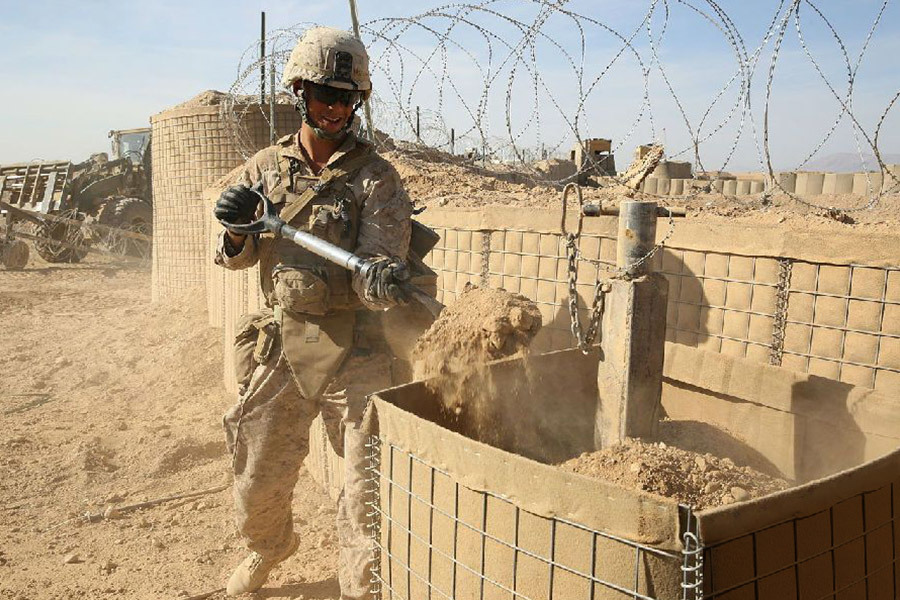
In military contexts, these barriers protect sensitive installations from potential attacks and unauthorized access. Their robust construction and strategic placement deter threats effectively.
4.2. Critical Infrastructure Protection
Power plants, data centers, and other critical infrastructures benefit from heavy-duty barriers that minimize risks from vehicular threats and vandalism.
4.3. Public Events and Gatherings
During large public events, organizers employ temporary heavy-duty barriers to manage crowds and ensure the safety of attendees.
4.4. Urban Security
Cities increasingly implement heavy-duty barriers to fortify high-risk areas, such as government buildings and commercial districts, ensuring the safety of citizens.
5. The Technology Behind Heavy Duty Defense Barriers
The evolution of defense barriers has been significantly influenced by technological advancements. Here are some of the key technologies used:
5.1. Smart Barriers
Smart barriers integrate advanced technology, such as sensors and alarms, to provide real-time monitoring and alerts for unauthorized access attempts.
5.2. Surveillance Integration
Many modern heavy-duty barriers are equipped with surveillance capabilities, including cameras and motion detectors, enhancing their effectiveness.
5.3. Automated Systems
Automated systems allow for quick deployment and retraction of barriers, providing security personnel with greater control and responsiveness in dynamic environments.
6. Key Benefits of Implementing Heavy Duty Defense Barriers
Implementing heavy-duty defense barriers offers numerous benefits:
6.1. Enhanced Security
These barriers provide a formidable first line of defense, deterring potential threats and unauthorized access.
6.2. Risk Mitigation
By controlling vehicle access and managing pedestrian traffic, heavy-duty barriers significantly reduce the risk of accidents and security breaches.
6.3. Cost-Effectiveness
Investing in high-quality defense barriers can lead to long-term savings by minimizing damage from potential attacks or accidents.
7. Case Studies: Heavy Duty Defense Barriers in Action
Examining real-world applications can illustrate the effectiveness of heavy-duty defense barriers.
7.1. Event Security at Major Festivals
At large-scale music festivals, organizers deployed modular barriers to guide crowd flow and restrict vehicle access to sensitive areas, successfully preventing incidents and ensuring safety.
7.2. Fortifying Critical Infrastructure
A major data center implemented heavy-duty concrete barriers around its perimeter, leading to a significant decrease in security breaches and vandalism attempts.
8. The Future of Heavy Duty Defense Barriers
The future of heavy-duty defense barriers looks promising, with trends indicating increased integration of smart technology. As security threats evolve, barriers must adapt to meet new challenges, including seamless integration with urban infrastructure and advanced surveillance systems.
9. Frequently Asked Questions (FAQs)
9.1. What materials are commonly used for heavy-duty defense barriers?
Heavy-duty defense barriers are typically constructed from reinforced steel, concrete, or high-density polyethylene, selected for their durability and impact resistance.
9.2. How effective are heavy-duty barriers against vehicular threats?
These barriers are engineered to withstand significant impacts, providing a strong defense against vehicular attacks and unauthorized access.
9.3. Can heavy-duty barriers be moved or repositioned easily?
Many modern barriers are designed to be modular and easily transportable, allowing for quick deployment in various locations as needed.
9.4. Are there any aesthetic options for heavy-duty barriers?
Yes, many manufacturers offer customizable designs and finishes that allow barriers to blend seamlessly into their surroundings while maintaining security.
9.5. How do smart barriers enhance security measures?
Smart barriers come equipped with integrated sensors and surveillance systems that provide real-time monitoring, enhancing the overall security infrastructure.
10. Conclusion
Heavy-duty defense barriers play an indispensable role in contemporary security solutions. As threats evolve, these barriers adapt, incorporating innovative designs and advanced technologies to ensure the safety and security of vital infrastructure and public events. By understanding their applications, benefits, and technological advancements, organizations can make informed decisions about implementing heavy-duty defense barriers in their security strategies. As we look to the future, the continued evolution of these barriers will undoubtedly provide even greater protection in an increasingly complex security landscape.
Get A Quote
Note: Please leave your email address, our professionals will contact you as soon as possible!
Spotlight






Official Website
Hello, What can we do for you?
*Note: Please be sure to fill in the information accurately and keep the communication unblocked. We will contact you as soon as possible


