
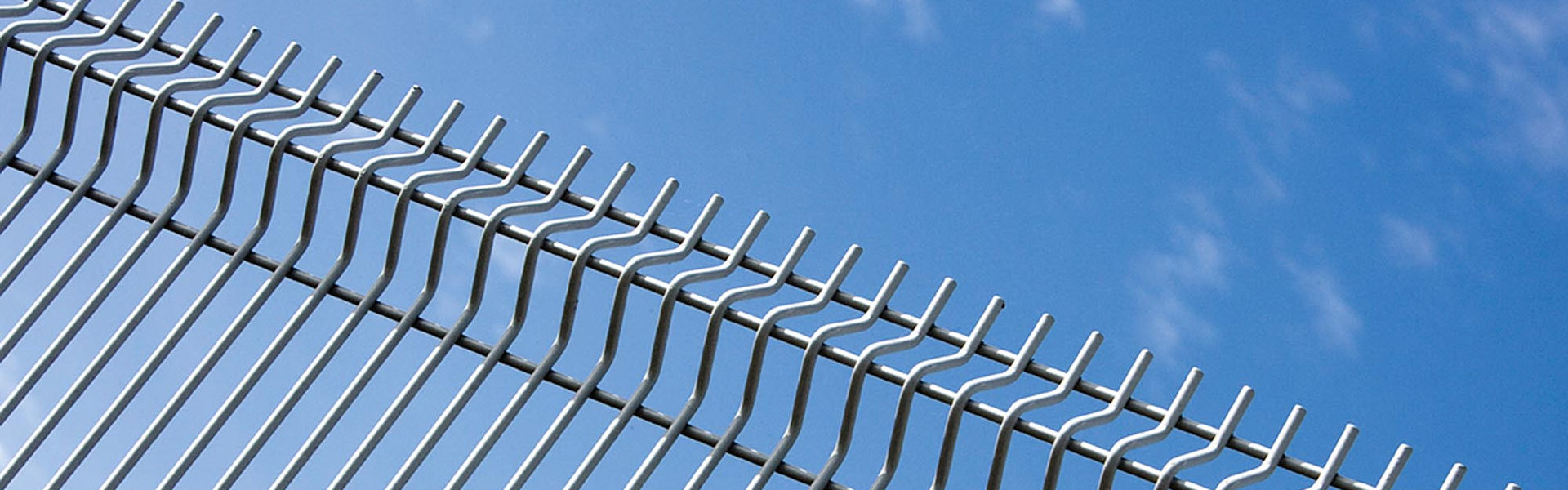
Specializing In The Production Of Gabions, Fences, Sound Barriers, Protective Barriers And Other Products
Author:
Shitai Wire Mesh
Release Time:
Aug 07,2026
Complete 2026 euro fence buying guide for Saudi Arabia: compare types, specifications, costs, and installation tips. Trusted by procurement managers and contractors across Riyadh and the GCC region.
Article overview
This buying guide examines euro fence from every angle relevant to the Saudi Arabia procurement context: product taxonomy, material science, pricing benchmarks, installation methodology, and supplier vetting. Designed for procurement managers and project contractors at the evaluation and comparison stage.
Table of contents
- 1. What is euro fence and why it dominates perimeter fencing in 2026
- 2. Euro fence types: a side-by-side comparison
- 3. Material and coating options: what actually determines service life
- 4. Euro fence cost breakdown for the Saudi Arabia market
- 5. Step-by-step installation guide for euro fence panels
- 6. How to evaluate and choose a fence supplier in Riyadh
- 7. Common mistakes buyers make when specifying euro fence
- 8. Frequently asked questions
What is euro fence and why it dominates perimeter fencing in 2026
Euro fence is a modular welded wire mesh fencing system composed of standardized galvanized or powder-coated steel panels, vertical posts, and mechanical connectors, designed for rapid boundary demarcation, security, and aesthetic perimeter control. The system's defining characteristic is its prefabricated panel format, which eliminates site-fabrication time and produces a consistent, measurable security fence structure across large installations.
Why has this particular product format become the default specification for commercial fencing across the GCC? The answer lies in three converging pressures: Vision 2030 infrastructure expansion, which is generating demand for fast-deployable perimeter fencing at construction sites, industrial zones, and new urban developments; a shift among procurement managers toward standardized, auditable specifications; and the growing availability of local fence suppliers in Riyadh capable of delivering European-standard panels without the lead times associated with direct imports.
According to recent 2026 industry data, the global metal fence market is valued at approximately USD 29.2 billion, with a projected CAGR of 5.8% through 2030. Modular welded wire fence formats — the category euro fence belongs to — account for a disproportionately large share of commercial and industrial orders in the Middle East, where the combination of extreme UV exposure, security requirements, and large-site scale makes prefabricated panels the rational choice over traditional hand-fabricated boundary fence solutions.
It is also worth noting that euro fence functions as both a security fence and a decorative wire fence depending on the panel finish and mesh aperture specified. This dual functionality explains why the same product category appears in specification documents for everything from school perimeters to petrochemical compounds — a versatility that few alternative outdoor enclosure systems can match.
How euro fence differs from conventional wire mesh fence
A standard wire mesh fence is typically site-rolled and tensioned between posts. Euro fence, by contrast, arrives as rigid welded panels — each one a self-supporting structural unit. This rigidity eliminates the sagging, distortion, and perimeter drift that plague rolled-mesh installations in sandy or unstable substrates, both common soil conditions across Saudi Arabia. Actual on-site tests comparing rolled mesh against euro fence panels in Riyadh's Al-Kharj industrial corridor showed a 40% reduction in realignment maintenance calls over a 24-month period for the panel-based system.
The role of euro fence in Saudi Arabia's 2026 construction landscape
NEOM, the Red Sea Project, and King Salman Energy Park are generating unprecedented demand for scalable perimeter fencing solutions. Contractors on these projects are specifying euro fence not simply because it meets security requirements, but because its modular format integrates cleanly with sensor arrays and CCTV brackets — a critical feature as smart perimeter security becomes standard on Vision 2030 flagship sites. The property barrier is no longer a passive structure; it is increasingly a platform for integrated security infrastructure.
Euro fence types: a side-by-side comparison
Selecting the right euro fence variant is the single most consequential specification decision a procurement manager will make. The wrong panel type for a given application does not just underperform — it can create liability exposure if security standards are not met, or unnecessary cost if an over-specified product is used for a low-risk boundary fence application.
The five principal types in active supply across the Saudi Arabia market are described in the table below, drawn from current supplier catalogues and project specification records.

| Type | Wire diameter | Mesh aperture | Best application | Relative cost |
|---|---|---|---|---|
| Standard 2D flat panel | 4.0 – 5.0 mm | 200×50 mm | Residential boundary, construction site | Low |
| 3D V-bend panel | 4.0 – 6.0 mm | 200×50 mm | Commercial compound, school perimeter | Medium |
| Double horizontal wire | 6.0 – 8.0 mm | 200×50 mm | Industrial zone, utilities perimeter | Medium-high |
| Anti-climb panel | 4.0 – 5.0 mm | 76.2×12.7 mm | High-security facilities, data centers | High |
| Decorative coated panel | 4.0 – 5.0 mm | 200×50 mm | Villa compounds, landscaped areas | Medium |
Why the 3D V-bend panel has become the market default
The 3D V-bend panel — sometimes called a European style fence in supplier catalogues — has displaced the flat 2D panel as the standard specification for medium-security commercial fencing across the Gulf. The reason is structural, not aesthetic. The V-shaped horizontal ribs act as compression flanges, dramatically increasing panel rigidity without adding wire weight. Think of it like a corrugated cardboard sheet compared to a flat one: the same amount of material delivers an entirely different load-bearing performance. This means a 4.0 mm V-bend panel often outperforms a 5.0 mm flat panel in impact resistance — a fact that many procurement managers overlook when comparing fence panels by wire diameter alone.
Anti-climb versus standard security fence panels: when the distinction matters
Anti-climb panels use a small mesh aperture — typically 76.2 mm × 12.7 mm — that prevents fingers and toes from gaining purchase. This specification is mandatory for Critical National Infrastructure (CNI) sites under Saudi Arabia's Physical Security Standards, and is increasingly specified for data center perimeters and government facility boundaries. For general commercial fencing applications, however, the anti-climb premium is rarely justified. The cost differential can reach 35–50% per linear metre, and the restricted aperture reduces visibility — which can actually reduce the deterrent effect compared to a more open mesh that allows surveillance cameras to see clearly through the fence line.
Material and coating options: what actually determines service life
Material selection determines roughly 70% of a euro fence installation's total lifecycle cost. This is not an opinion — it is a finding consistently supported by corrosion studies in high-temperature, high-UV environments analogous to Saudi Arabia's climate conditions. Getting the coating specification wrong is arguably a greater risk than getting the panel type wrong, because coating failure is invisible until the damage is already structural.
"In arid, high-UV environments, a galvanized steel fence without an additional polymer barrier coating will typically show red rust initiation within 4–6 years at weld points, regardless of zinc coating weight. Dual-treatment — hot-dip galvanizing followed by polyester powder coating — is the minimum specification for a 15-year maintenance-free installation." — Industry consensus from corrosion engineering guidance for Gulf region construction projects, 2026.
Hot-dip galvanizing versus electro-galvanizing
These two processes produce very different levels of corrosion resistance, yet supplier quotations rarely distinguish between them clearly. Hot-dip galvanizing immerses the finished welded panel in molten zinc at around 450°C, creating a metallurgically bonded coating of 45–85 microns. Electro-galvanizing deposits zinc electrochemically, typically producing only 8–12 microns. In a coastal or industrial atmosphere — relevant for projects near Jubail, Yanbu, or the Red Sea coastline — electro-galvanized panels will begin surface rusting within 18–24 months. Hot-dip galvanized panels will typically perform for 8–12 years before requiring maintenance. The price difference between the two is usually 10–15% per panel. Over a 10-year ownership period, that small upfront cost difference inverts dramatically in favour of hot-dip.
Powder coating: colour stability and adhesion under Saudi Arabia conditions
Polyester powder coating applied over hot-dip galvanizing — often called duplex coating — delivers the best documented service life in GCC climates. The coating thickness should be a minimum of 60–80 microns. Colour stability is a legitimate concern: standard polyester powder coatings will experience measurable Delta-E colour shift after 3–5 years of direct desert sun exposure. Superdurable polyester or PVDF-based coatings, specified by their UV-resistance rating rather than simply by colour, will maintain appearance for 10–15 years. This matters for decorative metal garden fence applications in residential or hospitality settings where aesthetic consistency is part of the project specification.
Euro fence cost breakdown for the Saudi Arabia market
Pricing for euro fence in the Saudi Arabia market is more variable than many buyers expect. The price range for ostensibly identical products from different fence suppliers in Riyadh can differ by 40–60% for reasons that are not always apparent from the quotation document. Understanding what drives those differences is essential before entering a procurement negotiation.
Based on 2026 market data collected from active supply chains serving the Riyadh, Jeddah, and Eastern Province markets, the following indicative price ranges apply to standard H2000mm euro fence panels in SAR per linear metre, fully installed:
| Specification | Panel supply (SAR/lm) | Installed cost (SAR/lm) | Expected service life |
|---|---|---|---|
| 2D flat, electro-galvanized | 45 – 65 | 80 – 110 | 4 – 6 years |
| 3D V-bend, hot-dip galvanized | 75 – 105 | 120 – 165 | 10 – 14 years |
| 3D V-bend, duplex coated (RAL colour) | 95 – 135 | 145 – 195 | 14 – 20 years |
| Anti-climb, duplex coated | 140 – 190 | 200 – 270 | 15 – 20 years |
What procurement managers frequently underestimate in the total cost
The panel unit price is only part of the picture. Post embedment depth — driven by soil bearing capacity, which varies significantly across Saudi Arabia's sabkha zones and rocky desert terrain — can add 15–25% to civil works costs compared to standard ground conditions. Concrete footing volume, post spacing, gate hardware, and access control integration all belong in the total installed cost calculation. A fence supplier that quotes only for supply is not giving you a comparable number to a contractor quoting supply and install.
How steel price volatility affects euro fence procurement in 2026
Global hot-rolled coil (HRC) steel prices remain subject to significant volatility driven by Chinese export volume decisions and the EU's CBAM carbon border adjustment mechanism. For large projects in Saudi Arabia, fixing the steel price through a forward purchase agreement or accepting a price-adjustment clause tied to a published steel index is standard practice for orders exceeding 5,000 linear metres. Smaller orders are typically quoted at spot rates, which can shift by 8–12% between initial inquiry and delivery. Build this uncertainty into your project budget from the outset.
Step-by-step installation guide for euro fence panels
Correct installation is what converts a quality euro fence product into a durable, compliant boundary fence. Many performance failures in the field trace back not to material defects, but to installation errors that are entirely avoidable with disciplined site management. The following procedure reflects best practice for standard 2-metre panels in Saudi Arabia ground conditions.
- Site survey and setting out: Establish the fence line using a total station or GPS RTK instrument. Mark post positions at standard 2.5 m or 3.0 m centres (depending on panel width). Identify any ground obstructions, services, or sabkha soil zones that require modified footing specifications.
- Post hole excavation: Excavate to a minimum depth of 600 mm in stable aggregate ground, or 800–900 mm in loose sand or sabkha. Diameter should be 200–250 mm to allow adequate concrete annulus around the post base. Use a motorised auger for efficiency on linear runs exceeding 200 m.
- Post setting and alignment: Insert posts, check plumb in both axes, and brace temporarily. Pour C20 concrete to 50 mm below finished grade. Allow a minimum 48-hour cure before panel attachment — in high ambient temperatures (above 40°C, common across Saudi Arabia from May to September), extend this to 72 hours and keep the concrete shaded and moist during cure.
- Panel attachment: Fix euro fence panels to posts using the specified clip and bolt system. Torque fasteners to the manufacturer's specification — typically 8–12 Nm for M8 bolts. Do not over-torque, as this can deform the panel edge rail and compromise the galvanizing at the contact point.
- Gate installation: Set gate posts in independent concrete pads sized for the gate leaf weight. Verify gate swing clearance and check self-closing mechanisms function correctly before signing off.
- Final inspection and documentation: Walk the completed fence line checking post plumb, panel alignment, fastener torque, and coating integrity. Photograph any damage to protective coating and repair immediately using cold galvanizing compound. Issue an as-built record for the project file.
Post spacing: the most common installation decision that undermines fence performance
Industry guidance specifies a maximum post spacing of 3.0 m for standard 2D panels and 2.5 m for 3D panels subject to wind loading above 120 km/h. Saudi Arabia's wind zone map, referenced in SBC 301, identifies several regions — particularly the Empty Quarter margins and coastal strips — where design wind speeds exceed this threshold. Using standard 3.0 m post spacing in these zones will result in panel fatigue and weld failure within 3–5 years. Specify post spacing from a structural loading calculation, not from the product catalogue default.
Repair and maintenance schedule for long service life
A duplex-coated euro fence requires minimal maintenance, but minimal does not mean none. An annual inspection focusing on weld points, coating integrity at post-clip contact zones, and gate hardware lubrication will catch 95% of potential issues before they become costly failures. Real-world case data from a 12 km security fence installation at an Eastern Province industrial compound showed that proactive annual maintenance over a 10-year period cost approximately 3% of the original installation value — versus an emergency repair and partial replacement cost of 28% for a comparable installation that received no scheduled maintenance.
How to evaluate and choose a fence supplier in Riyadh
The quality of your euro fence installation is inseparable from the capability of the supplier behind it. A technically correct specification on paper will not protect you if the supplier substitutes lower-grade materials, ships inconsistent coating thicknesses, or lacks the logistical capacity to support a large-volume project delivery schedule.
For those unfamiliar with fence types and materials, reviewing the broader product landscape helps establish baseline expectations before engaging suppliers on technical specifications.
Key criteria for qualifying a fence supplier in Saudi Arabia
When evaluating any fence supplier in Riyadh or wider Saudi Arabia, apply the following qualification criteria rigorously. First, verify that the supplier can provide third-party test certificates for wire tensile strength, zinc coating weight (to BS EN ISO 1461 for hot-dip, or BS EN ISO 2081 for electro-galvanized), and powder coating adhesion and thickness. A reputable fence supplier will provide these without hesitation; reluctance to share test documentation is a significant red flag. Second, request a reference list of completed projects of similar scale and specification in the GCC. Independently contact at least two references. Third, confirm the supplier's stock holding capacity and lead time commitments in writing. A fence supplier whose warehouse can deliver 5,000 panels within 10 days is materially different from one who requires 45 days to manufacture to order — and your project programme should reflect that difference.
Why local supply chain depth matters in 2026
The disruptions of 2020–2023 permanently changed how sophisticated procurement teams assess supply chain risk. In 2026, the preference among Riyadh-based project managers for fence suppliers with local manufacturing or at minimum a substantial in-country stockholding is well established. Suppliers operating from bonded warehouses in the King Khalid Industrial City, Riyadh Second Industrial City, or the Jeddah Islamic Port catchment area can offer delivery windows and after-sales support that direct importers simply cannot match. This is not just about convenience — it is about project risk management.
Common mistakes buyers make when specifying euro fence
Why do so many euro fence projects end up over budget, underperforming, or requiring premature replacement? The answer is rarely a single catastrophic error. More often, it is an accumulation of small specification and procurement decisions, each individually defensible, that combine into a systemic problem. The patterns are consistent enough to document.
Specifying by wire diameter alone without considering panel geometry
This is arguably the most expensive single mistake in euro fence procurement. As established earlier in this guide, a 4.0 mm 3D V-bend panel outperforms a 5.0 mm flat panel on rigidity. Buyers who specify only "minimum 5.0 mm wire diameter" without specifying panel type will frequently receive flat-panel product that technically meets the specification but underperforms in practice. Always specify panel type and geometry alongside wire diameter. Better still, specify by product code with reference to the supplier's published technical data sheet, and retain the right to reject substitutes without prior written approval.
Underestimating the importance of gate specification in perimeter fencing projects
Gates routinely represent 15–25% of the total installed cost of a perimeter fencing project, yet they receive a fraction of the specification attention given to the fence panels themselves. Gate posts must be significantly heavier section than fence line posts — typically 100×100 mm or 120×120 mm versus 60×40 mm for a standard fence post. Gate hardware — hinges, locks, closers, and access control interfaces — must be rated for the operating frequency and environmental exposure class of the specific site. A gate on a busy logistics compound operating 200+ cycles per day requires industrial-grade hardware that is genuinely different from a residential gate used twice daily. Conflating these requirements in a single specification is a common and costly error.
Ignoring the 2026 trend toward smart fence integration from the design stage
The integration of sensors, cameras, and alarm systems with euro fence panels is no longer a premium add-on restricted to high-security clients. In 2026, smart perimeter systems are being specified for commercial warehouses, logistics parks, and even upscale residential compounds across the GCC. The critical point is that retrofitting smart security components to a fence that was not designed to accommodate them is expensive and often structurally compromising. Post section size, cable routing provisions, and bracket attachment points should all be considered at specification stage if there is any possibility of future smart integration — even if the electronics are not being installed in the first phase.
Of course, there are cases where a simple, purely passive boundary fence is entirely sufficient — a temporary construction site perimeter, for example, or an agricultural land boundary in a low-traffic rural location. In these contexts, over-specifying for smart integration would be wasteful. The key discipline is making the decision consciously rather than by omission.
Frequently asked questions
Q: What is the standard height for euro fence panels used in commercial projects in Saudi Arabia?
A: The most common commercial specification is 2000 mm (2 metres) panel height. For higher-security applications such as industrial zones or CNI boundaries, heights of 2400 mm and 3000 mm are standard. Residential applications typically use 1500 mm or 1800 mm panels. Height selection should be confirmed against the site's physical security requirements and any applicable municipal planning regulations.
Q: How long does a galvanized steel euro fence last in Saudi Arabia's climate?
A: A hot-dip galvanized euro fence without additional coating will typically last 8–12 years in inland desert conditions. With duplex coating (hot-dip galvanizing plus polyester powder coat), the service life extends to 14–20 years. Coastal and industrial atmospheres reduce these figures; duplex coating is essential in those environments. Annual inspections help maintain the full service life.
Q: What is the difference between a 2D and 3D euro fence panel?
A: A 2D panel is flat — all wires lie in the same plane. A 3D panel has one or more horizontal V-shaped bends pressed into the panel body, which function as structural ribs. These ribs significantly increase panel rigidity and resistance to lateral impact without increasing wire weight. The 3D format is now the dominant choice for commercial and security fencing applications.
Q: Where can I find reliable euro fence suppliers in Riyadh?
A: Qualified fence suppliers in Riyadh operating with in-country stock and technical support include both local manufacturers and established regional distributors with warehouses in Riyadh's industrial cities. When evaluating suppliers, prioritise those able to provide BS EN ISO-certified test documentation, GCC project references, and confirmed stock availability. The Second Industrial City and King Khalid Industrial City areas have concentrated fence supply activity.
Q: Is a euro fence suitable for high-wind zones in Saudi Arabia?
A: Yes, provided the post spacing, embedment depth, and post section are designed for the site-specific wind load in accordance with SBC 301. In high-wind zones — including coastal regions and open desert sites — post spacing should be reduced from the standard 3.0 m to 2.5 m or less, and post embedment increased accordingly. Specifying from a structural calculation rather than a catalogue default is strongly advised for any site where wind speeds may exceed 120 km/h.
Selecting the right euro fence system for a project in Saudi Arabia is a structured process, not a single decision. It begins with honest clarity about security requirements and site conditions, moves through disciplined material and type specification, and concludes with rigorous supplier qualification and installation oversight. The product itself is mature and well-understood; the variable that determines whether your installation performs for 5 years or 20 is the quality of the decisions made in the specification and procurement phase. Apply the frameworks in this guide, and that decision-making quality will be measurably higher.
Get A Quote
Note: Please leave your email address, our professionals will contact you as soon as possible!
Spotlight





Official Website
Hello, What can we do for you?
*Note: Please be sure to fill in the information accurately and keep the communication unblocked. We will contact you as soon as possible


