
Specializing In The Production Of Gabions, Fences, Sound Barriers, Protective Barriers And Other Products
Author:
Release Time:
Apr 23,2026
Welded gabion mesh is a strong steel wire structure used for retaining walls, erosion control, and landscaping. Durable, corrosion-resistant, and easy to install for outdoor engineering.
Welded gabion mesh is a high-strength steel wire mesh system widely used in civil engineering, environmental protection, and landscape construction projects. It is manufactured by welding steel wires at their intersections to form a rigid, uniform grid structure. This design provides superior structural stability compared to traditional woven gabion systems, making it highly suitable for demanding applications such as retaining walls, riverbank protection, slope stabilization, and architectural landscaping.
The primary advantage of welded gabion mesh lies in its strength and durability. The welded joints create a solid, fixed structure that maintains its shape under heavy loads and external pressure. This makes it ideal for filling with stones, gravel, or other durable materials to create stable and long-lasting structures. Once filled, the gabion units act as gravity-based retaining systems that resist soil movement, erosion, and water flow impacts.
Material selection plays a crucial role in the performance of welded gabion mesh. It is typically made from high-quality low-carbon steel wire, which is then treated with galvanization or PVC coating to enhance corrosion resistance. Galvanized welded gabion mesh offers excellent protection against rust and weathering, while PVC-coated versions provide additional resistance to harsh environmental conditions, including acid rain, saltwater exposure, and extreme temperature variations. These protective layers significantly extend the service life of the mesh, making it suitable for long-term outdoor applications.
Welded gabion mesh is available in various wire diameters, mesh sizes, and panel dimensions to meet different engineering requirements. Common configurations include square or rectangular grid patterns, which ensure uniform load distribution and structural integrity. The flexibility in design allows engineers and architects to customize gabion structures according to project specifications, whether for functional infrastructure or aesthetic landscaping purposes.
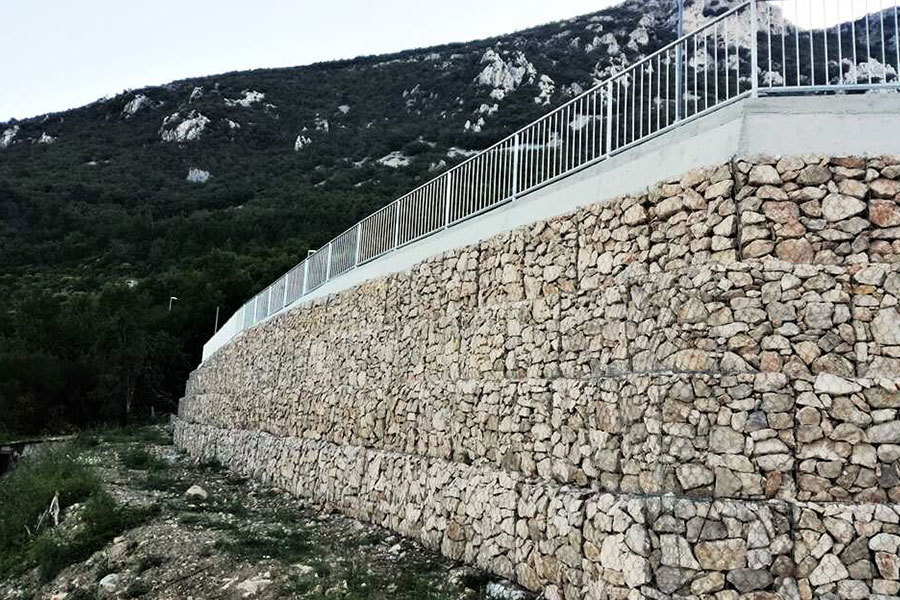
One of the most common applications of welded gabion mesh is in retaining wall construction. These structures are widely used to stabilize soil on slopes, highways, embankments, and construction sites. By filling the mesh baskets with stones, a strong and permeable wall is formed that can withstand lateral earth pressure while allowing water drainage. This permeability reduces hydrostatic pressure buildup, preventing structural failure and improving long-term stability.
In riverbank and coastal protection projects, welded gabion mesh plays a vital role in controlling erosion. Water flow can gradually erode soil and destabilize banks, leading to environmental degradation and infrastructure damage. Gabion structures absorb and dissipate the energy of flowing water, protecting shorelines and riverbanks from erosion while maintaining natural water movement. This makes them an environmentally friendly solution for hydraulic engineering projects.
Slope stabilization is another important application. In mountainous or hilly regions, soil erosion and landslides pose significant risks. Welded gabion mesh structures reinforce slopes by holding soil in place and preventing surface movement. Combined with vegetation growth, they create a stable and environmentally integrated solution that improves both safety and ecological balance.
In addition to engineering applications, welded gabion mesh is widely used in landscape architecture. Designers use gabion walls, benches, fences, and decorative structures to create modern and visually appealing outdoor spaces. The natural appearance of stone-filled gabions blends well with surrounding environments, making them popular in parks, gardens, commercial developments, and public spaces. The modular nature of the system allows for creative design flexibility and easy installation.
Installation of welded gabion mesh is relatively simple and efficient. The panels are assembled into box-shaped or cylindrical structures using connecting wires, spirals, or clips. Once assembled, the gabion units are filled with stones or other suitable materials. The rigid welded structure ensures that the shape is maintained during filling and long-term use. Compared to traditional masonry or concrete retaining systems, gabion installation requires less specialized labor and can be completed more quickly, reducing overall project costs.
Maintenance requirements for welded gabion mesh are minimal. Once installed, the structures are highly stable and require little to no ongoing maintenance. The natural drainage capability prevents water accumulation, reducing the risk of structural damage. In most cases, gabion structures can last for decades with minimal intervention, making them a cost-effective solution for infrastructure projects.
From an environmental perspective, welded gabion mesh offers several advantages. It is a permeable structure that allows natural water flow and vegetation growth, promoting ecological balance. Over time, plants can grow between the stones, integrating the structure into the surrounding landscape. This helps restore natural habitats and reduces the visual impact of engineering structures on the environment. Additionally, many gabion systems use locally sourced stones, reducing transportation costs and carbon emissions.
Welded gabion mesh also provides excellent adaptability to different site conditions. Whether used in dry, rocky terrain or wet, flood-prone areas, it performs reliably under varying environmental stresses. Its modular design allows for easy expansion, modification, or repair, making it suitable for both small-scale landscaping projects and large-scale infrastructure developments.
In conclusion, welded gabion mesh is a versatile, durable, and environmentally friendly solution for modern engineering and landscaping needs. Its combination of high structural strength, corrosion resistance, ease of installation, and design flexibility makes it an ideal choice for retaining walls, erosion control, slope stabilization, and decorative applications. By integrating functionality with sustainability, welded gabion mesh continues to play an important role in contemporary civil engineering and landscape architecture projects around the world.
Get A Quote
Note: Please leave your email address, our professionals will contact you as soon as possible!
Spotlight





Official Website
Hello, What can we do for you?
*Note: Please be sure to fill in the information accurately and keep the communication unblocked. We will contact you as soon as possible


