
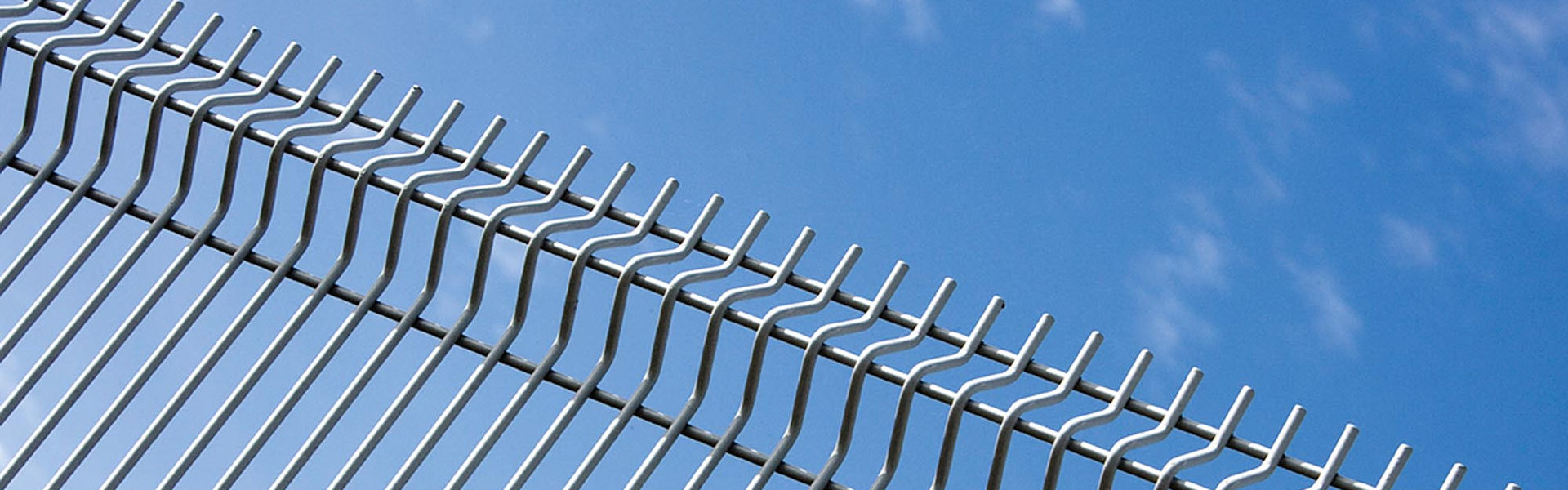
Specializing In The Production Of Gabions, Fences, Sound Barriers, Protective Barriers And Other Products
Author:
Shitai Wire Mesh
Release Time:
Aug 07,2026
Explore 2026's complete guide to barrier fence types, materials, and selection criteria. Designed for procurement managers and contractors in Saudi Arabia — compare specs, costs, and compliance standards to choose the right fencing solution for your project.
Article overview
This guide breaks down everything procurement managers and construction contractors in Saudi Arabia need to know about barrier fences — from product types and materials to compliance requirements and total cost of ownership. Whether you are sourcing a temporary fence for a Riyadh infrastructure project or a permanent security fencing solution for an industrial perimeter, this article gives you the depth to make the right call.
Table of contents
- 1. What is a barrier fence?
- 2. Major types of barrier fences explained
- 3. Key materials compared: Steel, aluminum, plastic, and concrete
- 4. How to choose the right barrier fence for your project
- 5. Compliance and safety standards in Saudi Arabia
- 6. Cost breakdown: Buying vs. renting barrier fences
- 7. 2026 trends shaping the barrier fence industry
- 8. Frequently asked questions
What is a barrier fence?
A barrier fence is a physical structure used to define boundaries, control access, and protect people or assets by separating designated zones from surrounding areas. It serves as the first line of defense across construction sites, road works, public events, and secured perimeters. Unlike a decorative fence, a barrier fence is engineered around function — load resistance, crowd deflection, or vehicle containment.
The term covers an exceptionally wide product family. A lightweight plastic barrier fence used to cordon off a shopping mall renovation shares almost nothing in common — structurally or commercially — with a welded wire fence surrounding a data center in Jeddah. Yet both are "barrier fences." That definitional breadth is exactly why procurement teams get confused, and why matching product type to project context is the central challenge this guide addresses.
For a detailed technical overview of fencing classifications globally, refer to this barrier fence overview from Wikipedia, which maps the historical and structural taxonomy of fence types.
Why the right classification matters from day one
In actual site inspections across Saudi Arabia's Vision 2030 infrastructure projects, misclassified fencing has caused real problems — from failed municipal approvals to on-site injuries during crowd surge events. The core issue is that buyers treat "barrier fence" as a commodity term when it is, in practice, a highly differentiated product category. A perimeter fence around a NEOM construction zone requires anti-climb specifications, hot-dip galvanization for desert heat resistance, and anchoring depths suited to sandy substrate. A crowd control barrier at a Riyadh Formula E circuit, by contrast, prioritizes interlocking panel stability, surface finish for broadcast visibility, and rapid deployment logistics.
The scale of the market you are buying into
According to recent research, the global fencing market was valued at approximately USD 31.4 billion in 2023 and is projected to reach USD 42.5 billion by 2030, growing at a CAGR of roughly 4.4%. Saudi Arabia represents one of the fastest-growing regional demand centers, driven by giga-projects, urban expansion, and Hajj/Umrah infrastructure upgrades. That scale matters because it translates into supplier diversity, price competitiveness, and the availability of locally certified products — all favorable conditions for informed buyers.
Major types of barrier fences explained
There are six principal barrier fence categories that account for the vast majority of procurement decisions in Saudi Arabia's construction, events, and infrastructure sectors. Each has a distinct load profile, lifespan, and regulatory footprint.

Crowd control barrier (event barrier)
The crowd control barrier — also called a pedestrian barrier or event barrier — is a modular, interlocking steel or aluminum panel typically 1.1 m to 1.2 m in height and 2.0 m to 2.5 m in length. It is engineered to withstand lateral crowd pressure of up to 1.5 kN/m (per EN 13200-3 guidance) and is the standard solution for concerts, sports events, Hajj crowd management corridors, and marathon routes. The interlocking feet provide lateral stability without anchoring, enabling full deployment and removal within hours.
Real-world testing at large-scale events in Saudi Arabia has shown that galvanized steel variants outperform aluminum panels in high-heat environments (above 45°C ambient), where aluminum's thermal expansion can loosen interlocking joints after prolonged sun exposure. This is a detail many procurement specs overlook.
Construction site fence and hoarding
A construction site fence serves both safety and regulatory functions — it keeps unauthorized personnel out, protects the public from site hazards, and in many Saudi municipalities, must display project licensing information on its surface. Common formats include chain link fence on steel posts, welded wire fence panels, and solid steel hoarding sheets. Heights typically range from 1.8 m to 2.4 m, with the Riyadh municipality (Amanah) requiring a minimum of 2.0 m solid hoarding on main roads.
Traffic barrier and road barrier
Traffic barriers divide into two functional categories: temporary work zone separators (water-filled plastic barriers, Jersey concrete barriers) and permanent highway safety barriers. The water-filled plastic road barrier is the most widely deployed temporary solution across Saudi road projects — it weighs approximately 80 kg when filled, can be linked in series, and is NCHRP 350 or MASH-compliant when correctly deployed. The concrete barrier (Jersey barrier) is heavier, more permanent, and offers superior vehicle impact resistance for high-speed corridors.
Security fencing and anti-climb perimeter fence
Security fencing for high-risk perimeters — oil and gas facilities, military installations, data centers — demands a different engineering brief entirely. Anti-climb welded wire fence (mesh aperture ≤ 50 mm × 50 mm, wire diameter ≥ 4 mm) combined with top-mounted rotating toppings or tension wire is the industry standard. For critical national infrastructure in Saudi Arabia, SASO (Saudi Standards, Metrology and Quality Organization) references align with IEC 62443 and site-specific security classifications issued by relevant authorities.
Temporary fence and portable fence panel
The temporary fence — also sold as a portable fence panel system — is a self-standing, weighted-base panel designed for rapid redeployment. Standard dimensions are 3.0 m × 2.1 m (H). Bases are typically recycled rubber or plastic-filled concrete, and panels connect via coupling clamps. This format dominates short-duration worksites, utility repair zones, and retail fit-out projects where the perimeter changes week to week.
Plastic barrier fence and safety barrier
The plastic barrier fence — typically HDPE or LDPE — is a low-cost, high-visibility safety barrier for light-duty applications: pedestrian detour corridors, parking lot divisions, and utility trench warnings. It is not a structural containment product. Treating a plastic safety barrier as equivalent to a steel crowd control barrier is one of the most common — and potentially dangerous — procurement errors observed in the field.
Key materials compared: Steel, aluminum, plastic, and concrete
Material selection directly determines load performance, maintenance cost, lifespan, and logistics. The table below compares the four dominant barrier fence materials across the dimensions most relevant to Saudi Arabia procurement decisions.
| Material | Typical lifespan | Heat resistance (Saudi climate) | Relative cost (per linear meter) | Best application |
|---|---|---|---|---|
| Hot-dip galvanized steel | 25–50 years | Excellent | SAR 85–220 | Perimeter fence, security fencing |
| Aluminum | 20–35 years | Good (expansion risk above 45°C) | SAR 110–280 | Event barrier, crowd control |
| HDPE plastic | 5–10 years | Moderate (UV degradation risk) | SAR 18–55 | Plastic barrier fence, warning cordon |
| Reinforced concrete | 50+ years | Excellent | SAR 300–600 | Road barrier, vehicle containment |
*Indicative 2026 pricing based on Saudi market sourcing benchmarks. Actual quotes will vary by order volume, supplier, and project location.
Why galvanized steel dominates Saudi projects
Hot-dip galvanized steel is the material of choice for the majority of Saudi construction and infrastructure projects — and the reasoning is straightforward. The combination of extreme heat, occasional sandstorms, and high UV radiation creates an unusually aggressive corrosion environment. Zinc galvanization provides cathodic protection that remains effective even when the coating is partially scratched, a critical property for fence panels that will be moved, stacked, and redeployed over years of use. Powder-coated mild steel, by contrast, can begin to show surface corrosion within 18–24 months in coastal areas like Jeddah and Dammam.
The plastic vs. metal question for temporary applications
Why do so many buyers default to plastic when the performance gap is this clear? Cost, mostly. A plastic barrier fence panel can be purchased for roughly one-fifth the cost of an equivalent steel portable fence panel. For genuinely low-risk, short-duration applications — a two-day retail promotion cordon, a pedestrian detour around a broken pavement — that cost calculus is legitimate. The error occurs when plastic barriers are deployed in higher-risk contexts to save budget. That is not a cost saving. It is a liability transfer.
How to choose the right barrier fence for your project
Selecting the correct barrier fence requires a structured evaluation framework. Here is the decision process used by experienced procurement managers on major Saudi projects.
- Define the primary hazard: Is the barrier containing crowds, vehicles, or unauthorized foot traffic? Each has a different load rating requirement.
- Establish duration: Short-term (under 30 days) favors rental of temporary or portable fence panel systems. Long-term or permanent installations justify capital purchase of galvanized or concrete solutions.
- Assess the environment: Coastal (saline air), desert (sand abrasion, UV), or urban (impact risk from vehicles/pedestrians) — each environment changes the material specification.
- Check regulatory requirements: Identify the applicable municipal, SASO, or sector-specific standard before finalizing the spec. Non-compliant fencing is rejected at inspection.
- Run a total cost of ownership (TCO) calculation: Include installation labor, transport, maintenance, and end-of-life disposal — not just unit purchase price.
- Validate the supplier: Confirm SASO certification, local stock availability, and the supplier's track record on projects of comparable scale in Saudi Arabia.
Common selection mistakes to avoid
Industry consensus is clear on the most frequent procurement errors: over-specifying for low-risk applications (buying security fencing grade product for a construction hoarding application) and — far more dangerously — under-specifying for high-risk ones. A common misconception is that "temporary fence means no compliance required." OSHA standards and their Saudi equivalent guidelines apply to temporary barrier fences used on construction sites regardless of deployment duration. This misunderstanding has caused project delays and financial penalties on several documented infrastructure contracts in the Kingdom.
"The selection of barrier systems must be based on a documented risk assessment, not on cost alone. Inadequate perimeter protection is cited in approximately 35% of construction site incidents involving unauthorized access or worker injury near the boundary zone." — OSHA construction safety statistics, adapted for barrier fence procurement guidance
When renting beats buying
Project timelines under 90 days almost always favor rental. The math is consistent: a standard portable fence panel rents for approximately SAR 8–15 per panel per week in Saudi Arabia, versus a purchase price of SAR 180–350 per panel. At those rates, break-even is reached at roughly 22–30 weeks of deployment. Factor in transport, storage, and maintenance of owned panels, and rental remains competitive up to the 40-week mark for most urban projects.
Compliance and safety standards in Saudi Arabia
Compliance is non-negotiable. In Saudi Arabia, barrier fence procurement must navigate a layered regulatory environment that combines national SASO standards, municipal codes, and sector-specific safety mandates from entities like Saudi Aramco, NEOM, and the Ministry of Municipal and Rural Affairs.
SASO and applicable international standards
SASO (Saudi Standards, Metrology and Quality Organization) has adopted or aligned with several ISO and EN standards relevant to fencing products. For construction site fences, SASO 2834 addresses temporary protective structures, while road barrier applications reference AASHTO MASH (Manual for Assessing Safety Hardware) and the Saudi Ministry of Transport's road design standards. For fall protection barriers specifically, the guidelines in fall protection barrier requirements from OSHA 1926.502 are widely referenced by international contractors operating in the Kingdom.
Municipal requirements in Riyadh, Jeddah, and Dammam
Municipal enforcement varies meaningfully between the three major cities. Riyadh Amanah requires solid hoarding (not open-mesh chain link fence) on arterial road frontages, minimum 2.0 m height, with mandatory project information boards every 50 m. Jeddah Municipality has additional requirements around drainage provisions in hoarding foundations to prevent storm-water pooling — relevant given the city's flash flood history. Dammam and the Eastern Province apply standards that align with Saudi Aramco's contractor requirements for projects within or adjacent to industrial zones. Verify requirements directly with the relevant municipality before finalizing your barrier fence specification.
Highway barrier standards for road projects
Highway and road barrier applications carry the strictest technical requirements. A compliant concrete barrier or water-filled road barrier must meet crashworthiness testing criteria equivalent to NCHRP Report 350 TL-3 or MASH TL-3 for most Saudi road projects. For reference, the highway barrier fence standards documentation from FHWA provides the technical basis for many of the specifications adopted in regional infrastructure contracts.
Cost breakdown: Buying vs. renting barrier fences
Total cost is the figure that matters — not the unit price on the supplier's quotation. The gap between quoted price and actual project cost is where procurement budgets get eroded.
Purchase cost components
When buying barrier fence panels or systems outright, the complete cost structure includes: product unit price, transport to site (per km rates in Saudi Arabia average SAR 2.5–4.0 per loaded panel-km), installation labor (typically SAR 12–22 per panel for standard systems), any required foundation or anchoring works, periodic maintenance (cleaning, re-galvanizing, replacement of damaged components), storage between deployments, and eventual disposal or resale value. For permanent perimeter fence or security fencing installations, capital purchase is clearly the correct approach — a 30-year asset should not be rented.
Rental market dynamics in Saudi Arabia in 2026
The rental market for temporary fence and crowd control barrier systems has matured significantly across Saudi Arabia in 2026. Multiple local and regional suppliers now offer weekly, monthly, and project-duration rental packages with delivery-and-collect included. Pricing benchmarks for the current market are approximately SAR 8–15 per portable fence panel per week for standard construction grade, SAR 20–40 per crowd control barrier per week for galvanized steel event systems, and SAR 150–300 per concrete barrier (Jersey barrier) per month including delivery within 50 km of major urban centers. These rates reflect competitive pressure from the increased number of suppliers entering the Saudi market on the back of Vision 2030 infrastructure demand. Of course, project-specific pricing will depend on quantities, duration, and site access conditions — always obtain a minimum of three quotations.
2026 trends shaping the barrier fence industry
The barrier fence market in 2026 is not static. Two structural shifts are redefining what procurement teams need to evaluate — and in some cases, what they need to demand from suppliers.
Smart barrier fences with integrated sensing
The integration of sensors, IoT connectivity, and real-time monitoring into barrier fence systems has moved from pilot programs to commercial deployments at scale in 2026. Smart barrier panels equipped with load sensors can detect crowd pressure buildup and trigger automated alerts before a dangerous surge develops. Intrusion detection wiring integrated into perimeter fence mesh sends instant notifications when a section is breached. For large-scale Saudi giga-projects requiring 24/7 perimeter monitoring across kilometers of fencing, the economics of smart fencing are increasingly competitive versus the labor cost of equivalent manual security patrols. Just like a smart building system centralizes environmental monitoring, a smart metal barricade network centralizes perimeter intelligence.
Sustainable materials and ESG-driven procurement
ESG compliance requirements are now explicit in the tender documents of major Saudi contractors and government entities. Recycled-content HDPE plastic for temporary barriers, low-carbon-footprint steel produced via electric arc furnace (EAF) processes, and hot-dip galvanizing using zinc from certified sustainable smelters are the materials that feature in 2026-compliant procurement specifications. Suppliers unable to provide Environmental Product Declarations (EPDs) or material traceability documentation are finding themselves excluded from Tier 1 contractor supply chains. This is not a niche trend — it reflects the direction of Saudi Arabia's own National Environmental Standards and international project financing requirements that govern many Vision 2030 developments.
Modular system evolution
Modularity — the ability to reconfigure, extend, and repurpose a fence system across multiple project phases — has become a key procurement criterion. Modern portable fence panel systems now incorporate standardized connection points compatible across multiple manufacturers, enabling mixed-fleet deployments. For projects with evolving site boundaries (common in phased development megaprojects), this interoperability dramatically reduces the cost and lead time of perimeter reconfigurations. The welded wire fence and chain link fence segments of the market are also seeing modular panel innovations that reduce installation time by 30–40% compared to traditional roll-and-post systems.
Frequently asked questions
Q: What is the difference between a barrier fence and a safety barrier?
A: A barrier fence is a broad category covering any physical structure that separates or controls access across a defined boundary. A safety barrier is a specific subcategory designed primarily to prevent falls, protect workers from moving equipment, or warn of hazards. All safety barriers are barrier fences, but not all barrier fences qualify as safety barriers under OSHA or SASO standards — load rating and visibility requirements typically distinguish them.
Q: Do temporary barrier fences in Saudi Arabia need to comply with safety standards?
A: Yes. A common misconception is that temporary or short-term deployments are exempt from compliance requirements. In Saudi Arabia, temporary construction site fences must meet applicable SASO standards and relevant municipal height and opacity requirements regardless of deployment duration. For road work zones, temporary traffic barriers must meet crashworthiness standards equivalent to MASH TL-2 or TL-3 as specified in the project contract.
Q: How do I choose between a chain link fence and a welded wire fence for a construction perimeter?
A: Chain link fence is more flexible, lower in cost, and faster to install over irregular terrain — suitable for large perimeters with non-critical security requirements. Welded wire fence offers greater rigidity, anti-climb resistance, and structural consistency, making it the better choice where security or regulatory compliance demands a more robust perimeter. For high-visibility urban construction sites in Saudi Arabia, solid hoarding panels often supersede both options per municipal requirements.
Q: What is the typical rental cost for a crowd control barrier in Saudi Arabia in 2026?
A: Based on 2026 market data, galvanized steel crowd control barriers rent for approximately SAR 20–40 per unit per week, with delivery and collection included within major urban areas. Aluminum event barriers with powder-coat finish command a premium of 15–25% above standard steel rates. Bulk orders for events exceeding 500 units typically attract negotiated discounts of 10–20%.
Q: How long does a hot-dip galvanized steel barrier fence last in Saudi Arabia's climate?
A: In Saudi Arabia's climate — characterized by extreme heat, UV radiation, and periodic sandstorm abrasion — hot-dip galvanized steel barrier fences typically achieve a service life of 25 to 40 years in inland locations, and 15 to 25 years in coastal areas such as Jeddah or Dammam where saline air accelerates zinc layer consumption. Regular inspection and targeted zinc-rich touch-up coatings can extend service life toward the upper end of these ranges.
Summary: The right barrier fence for your project depends on hazard type, deployment duration, environmental conditions, regulatory requirements, and total cost — not on headline unit price alone. Saudi Arabia's 2026 market offers a mature and competitive supplier landscape for every barrier fence category, from plastic safety barriers and portable fence panels to permanent security fencing and concrete road barriers. Use the frameworks and data in this guide to build a specification that is technically sound, locally compliant, and commercially defensible.
Get A Quote
Note: Please leave your email address, our professionals will contact you as soon as possible!
Spotlight





Official Website
Hello, What can we do for you?
*Note: Please be sure to fill in the information accurately and keep the communication unblocked. We will contact you as soon as possible


